-
tel:
+86 13482234221 -
email:
andrea.chen@kejian-china.com

What Is Flexible Flashing and How Does It Work?
Mar 17, 2026
In modern building waterproofing systems, flexible flashing is a key functional component designed for structural joints and waterproofing weak points. Through material flexibility and structural design, it provides dynamic waterproof protection for areas prone to leakage such as roofs and walls, and is one of the core solutions to solve building detail waterproofing problems.
I. What Is Flexible Flashing?
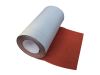
Flexible flashing refers to a strip-shaped waterproof component made of flexible waterproof materials as the core through composite technology or structural design, mainly used in areas with large structural deformation such as the junction between roof and wall, chimney root, pipe penetration through roof, and around skylights.
Different from traditional rigid flashing, flexible flashing has the following core characteristics:
1.Material Flexibility: Made mainly of rubber, modified asphalt or polymer materials, with good tensile deformation ability
2.Dynamic Adaptability: Able to adapt to structural displacement caused by temperature changes, settlement or vibration
3.Sealing Reliability: Forms a continuous, break-free waterproof barrier through self-adhesion, welding or mechanical fixing
4.Environmental Resistance: Has weather resistance, UV resistance and aging resistance, adapting to different climatic conditions
II. How Does Flexible Flashing Work?
Flexible flashing achieves waterproofing through a dual mechanism of "active adaptation + passive sealing", which can be specifically divided into three levels:
1. Dynamically Adapting to Structural Deformation
Building structures will produce slight displacements during use due to factors such as temperature changes, foundation settlement, and wind loads. Flexible flashing absorbs the stress caused by structural displacement through its own material's elastic deformation ability, avoiding leakage caused by material cracking.
For example:
· The roof expands in high summer temperatures, and the flexible flashing stretches accordingly
· The roof contracts in low winter temperatures, and the flexible flashing returns to its original shape
· Maintains sealing integrity during structural vibration caused by earthquakes or strong winds
2. Constructing a Continuous Waterproof Barrier
Flexible flashing achieves joint waterproofing through the following methods:
- Covering Seal: Completely wraps structural joints to block water penetration paths
- Lap Joint Connection: Forms effective lap joints with roof waterproof layers and wall waterproof membranes to avoid waterproof breakpoints
- Reinforced Seal: Uses double-layer construction or self-adhesive layers in key areas to enhance sealing reliability
3. Guiding Water Flow for Orderly Drainage
In addition to sealing functions, flexible flashing also has the function of guiding water flow:
- Through reasonable cross-sectional design, rainwater is guided to the roof drainage system
- Avoids water accumulation at joints, reducing damage to the waterproof system caused by hydrostatic pressure
- Special drip line design prevents rainwater from flowing along the wall and causing leakage
III. Materials and Types of Flexible Flashing
According to different application scenarios and technical requirements, flexible flashing is mainly divided into the following types:
| Type | Main Materials | Characteristics | Applicable Scenarios |
| Rubber-based | EPDM rubber, butyl rubber | Excellent weather resistance and elasticity | Roof-wall junctions, pipe penetrations through roofs |
| Modified Asphalt | SBS/APP modified asphalt | Strong adhesion, puncture resistance | Flat roofs, sloped roof flashing |
| Polymer | PVC, TPO | Chemical corrosion resistance, long service life | Industrial buildings, chemical plants |
| Composite | Rubber + non-woven fabric, metal foil + polymer | Excellent comprehensive performance | High-demand public buildings, landmark buildings |
IV. Advantages and Applications of Flexible Flashing
Compared with traditional rigid flashing, flexible flashing has the following significant advantages:
1.Adapting to Complex Structures: Able to adapt to irregular building shapes and complex joint designs
2.Reducing Construction Difficulty: Lightweight, easy to cut and install, improving construction efficiency
3.Extending Waterproofing Life: Reduces waterproofing failure caused by structural deformation, lowering maintenance costs
4.Good Environmental Performance: Free of heavy metals such as lead and cadmium, meeting modern building environmental requirements
Flexible flashing is widely used in various construction projects:
- Waterproofing of roofs, balconies and terraces in residential buildings
- Waterproofing of curtain walls, skylights and pipe joints in commercial buildings
- Waterproofing of roofs, exterior walls and equipment foundations in industrial plants
- Waterproofing of bridges, tunnels and culverts in transportation infrastructure
V. Development Trends of Flexible Flashing
With the advancement of construction technology, flexible flashing presents the following development trends:
1.High Performance: Developing intelligent flexible flashing materials with self-healing functions
2.Integrated Design: Achieving integrated waterproof design with roof systems and wall systems
3.Green Environmental Protection: Using recyclable materials and low-VOC production processes
4.Standardized Construction: Promoting prefabricated and modular flexible flashing products
Conclusion
As an important part of the building waterproofing system, flexible flashing provides reliable waterproof protection for building joints through its unique flexibility and adaptability. In modern building design, selecting appropriate flexible flashing products is a key measure to improve the overall waterproof performance of buildings and extend their service life.
Kejian focuses on building waterproofing and roof supporting solutions, and can provide professional flexible flashing products and technical support according to different building structures and application scenarios. Welcome to contact us for waterproofing solutions more suitable for your projects.

Recent Posts

October 26, 2016
The Most Successful Engineering ContractorContact US
Product Information
Quantity
Unit
Piece
Support order samples, customization, wholesale direct, and complete payment. If the product you look for does not have corresponding customized content, pls fill out the form below to contact us, and we will reply ASAP.