-
tel:
+86 13482234221 -
email:
andrea.chen@kejian-china.com

Lead Free Flashing vs Aluminum Flashing: Key Differences
Apr 29, 2026
preface
In roofing waterproofing systems, the selection of flashing materials directly determines whether future issues such as leaks, cracks, or rework will occur. With tightening environmental regulations, lead-free flashing is gradually replacing traditional materials; however, aluminum flashing remains the most widely used solution on the market. While both appear to be "lead-free solutions," their performance and applicable scenarios differ significantly in practical applications.
material structure
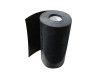
Lead-Free Flashing typically employs a composite structure, such as an aluminum mesh reinforcement layer combined with a modified polymer coating or a butyl rubber substrate.
The most distinctive feature of this structure is its high plasticity, allowing it to be profiled, bent, and fitted to complex surfaces just like traditional lead sheets.
The Aluminum Flashing is made of a single metal material and essentially consists of an aluminum plate. While it exhibits excellent corrosion resistance, its deformation capability is significantly limited, particularly in irregular structures, often requiring additional components or multiple joints.
- Aluminum Flashing: For standard straight structures (wall edges, roof ridges)
Construction difficulty
On the construction front, the advantages of Lead-Free Flashing are further enhanced. Thanks to its excellent flexibility, installers can directly cut, shape, and apply it on-site, significantly reducing installation complexity.
In contrast, Aluminum Flashing relies heavily on prefabricated dimensions and standardized installation during construction. Significant dimensional deviations leave limited room for on-site adjustments, often resulting in installation gaps or inadequate sealing.
Another practical issue is:
Aluminum flashing tends to rebound after bending, compromising its fit, whereas lead-free flashing more effectively maintains its formed shape.
- Aluminum Flashing: Standardized Engineering / Factory Prefabricated
Durability Performance
Many people mistakenly believe that aluminum flashing is more durable because "metal is stronger." However, in actual roofing conditions, durability depends not solely on the material's strength.
The outer layer of Lead Free Flashing typically offers UV and aging resistance, resists cracking under temperature fluctuations, and demonstrates superior stability—particularly in regions with frequent temperature swings.
Although aluminum flashing exhibits excellent corrosion resistance, fatigue issues are more likely to occur at joints during prolonged thermal expansion and contraction. Improper installation may also lead to water leakage risks.
- Aluminum Flashing: Standard Climate / Standard Structure
Environmental Protection and Regulations
In European and American markets, the promotion of lead-free flashing is largely driven by regulatory requirements. Compared to traditional lead-containing materials, it complies with stricter environmental standards and is more likely to obtain green building certifications.
Although Aluminum Flashing is inherently lead-free, Lead-Free Flashing proves more advantageous in certain applications where higher performance requirements are imposed on "lead alternatives" —such as the need for lead-like ductility.
- For high-standard buildings or projects requiring green certification, Lead-Free Flashing offers greater competitiveness.
- For general engineering projects, both can be used.
Cost and Comprehensive Selection
In terms of unit price, Aluminum Flashing typically offers greater cost-effectiveness; however, when construction efficiency, labor costs, and subsequent maintenance are taken into account, the situation changes significantly.
Lead-Free Flashing may incur slightly higher initial costs, but for complex structures and high-demand projects, it reduces installation time and minimizes rework risks, making it more cost-effective overall.
Actual selection recommendation:
- For projects with complex structures and stringent sealing requirements, lead-free flashing should be prioritized.
Lead Free Flashing vs Aluminum Flashing
|
VS |
Lead Free Flashing |
Aluminum Flashing |
|
material type |
Composite materials (flexible structures) |
Single metal (rigid structure) |
|
flexibility |
High, capable of conforming to complex structures |
Lower, primarily used for linear structures |
|
Construction Compatibility |
Can be customized on-site and easily molded |
Dependent on prefabrication, adjustment is difficult |
|
Waterproof performance |
High fit accuracy ensures more stable sealing performance |
Dependent on construction techniques |
|
durability |
Anti-aging with strong adaptability to temperature variations |
Corrosion-resistant, but susceptible to thermal expansion and contraction |
|
applicable scene |
Complex joints such as chimneys, skylights, and roof penetrations |
Regular structures such as wall trimmings and roof ridges |
|
Cost Consideration |
High material content; overall costs are controllable. |
Low material cost; construction costs are uncertain. |
epilogue
Lead-Free Flashing and Aluminum Flashing are not fully interchangeable; rather, they represent two distinct solutions tailored to different construction scenarios. The optimal selection should be determined through a comprehensive evaluation of structural complexity, construction conditions, and project specifications.
If your project involves complex nodes, stringent waterproofing requirements, or compliance with stricter environmental standards, Lead-Free Flashing is typically the safer choice.
If you are evaluating a roof waterproofing solution or seeking Lead-Free Flashing products better suited to your project requirements, please contact our engineering team. We can provide tailored recommendations and solutions based on your roof structure, construction conditions, and budget, helping you minimize construction risks and enhance overall waterproof performance.

Recent Posts

October 26, 2016
The Most Successful Engineering ContractorContact US
Product Information
Quantity
Unit
Piece
Support order samples, customization, wholesale direct, and complete payment. If the product you look for does not have corresponding customized content, pls fill out the form below to contact us, and we will reply ASAP.